

A doctor answers
Your agent's favorite way to get you healthcare
Asking your AI agent to find a doctor? See how it can connect you with a licensed physician through FutureClinic by MCP or browser, why messaging fits agents, and what stays your call.
The short answer
FutureClinic lets your AI agent get you care from a licensed US physician through the MCP server at https://mcp.futureclinic.com/mcp or by opening futureclinic.com in its own browser. It prepares the intake from past chats, and you confirm the summary and pay before a doctor sees your case ($40 for the best-fit doctor, or typically $20 to $100 to pick one).
Key facts
- Every clinician holds an MD, DO, or MBBS degree in a network of over 300 doctors, never a nurse practitioner or a physician assistant.
- A verified physician typically replies within a few hours, and almost always the same day or the next, with a care plan and a live-recorded Human Signature.
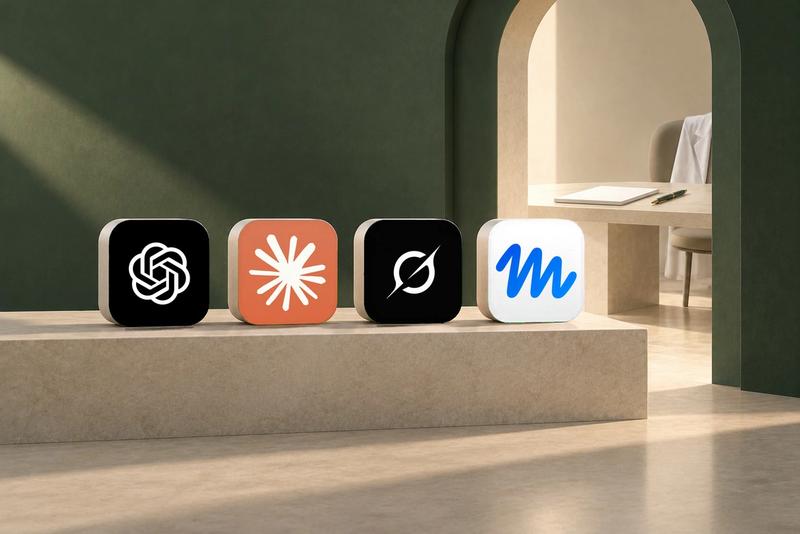
- Care is available by message in 34 states, from Claude, Claude Code, ChatGPT via Codex or Grok, or by starting in Instinct or Meta Muse and finishing in FutureClinic's chat.

Asking an AI agent a health question usually hits a wall. Your assistant can summarize research or track symptoms, yet the moment you need a diagnosis, prescription, or lab order, you face the usual options: waiting weeks for a clinic visit, sitting in a video queue, or buying recurring online medication bundles.
FutureClinic lets your personal AI agent connect you with a licensed US physician who cares for you by message. Whether it links via the Model Context Protocol (MCP) or drives its own web browser, your assistant pulls together your background from past chats and routes your visit to an actual physician.
How can an AI agent get you a real doctor?
Right now, there are two distinct ways to get medical care through your agent. Claude, Claude Code, ChatGPT (through Codex), and Grok connect to FutureClinic's MCP server at https://mcp.futureclinic.com/mcp with the server name futureclinic. For an assistant that operates its own computer, such as Grok Bot, both options work: it can plug into that same MCP endpoint or launch futureclinic.com inside its own browser to begin the intake. Instinct and Meta Muse can't add an MCP server, so they write up your story and send you a link to FutureClinic's chat, where you paste it and finish the visit yourself.
Both routes follow five steps:
- Tell your agent what is bothering you, such as an eczema flare or high blood pressure readings.
- It asks the questions a physician needs and fills in details from your past chats.
- You read and confirm the visit summary before any doctor sees it.
- You pay on FutureClinic's page with up-front pricing, no insurance needed, and no subscription required. The default choice most patients pick is $40, which routes your visit to the best-fit doctor across the entire clinic; alternatively, you can select a specific physician from the post-intake recommendations at the fee they post, which is typically $20 to $100.
- A real physician reviews your file, sends back a personalized care plan, and attaches a Human Signature.
Why does care by message fit the way agents work?
We believe personal AI agents are the future of how people manage their health. Over time, your agent holds useful context: the medicines you take, the cream that irritated your skin last winter, or the blood pressure numbers you logged recently.
A traditional clinic cannot take in those conversations. You arrive with a clipboard and repeat yourself, or open a telehealth form and start over from scratch. When linked with FutureClinic, your AI fills out the medical intake using details you have mentioned before, and once you check those responses, your doctor starts with your full context already in hand.
Messaging also suits software agents. An agent cannot sit in a waiting room or hold a live video queue for you. Because FutureClinic runs by message, there is no appointment to book, no phone call, and no video visit. Even if you have your assistant draft a visit at 2am, you simply approve the summary and pay whenever you like; physician replies typically land within a few hours, and almost always the same day or the next.
Who takes your case on the other side?
When an agent helps find care, incentives matter. Many online health companies profit from the medications they sell or from recurring packages that keep shipping products. FutureClinic sells no medicines or products. Any medication ordered is sent straight to your chosen local pharmacy, and because the physician makes nothing extra for ordering a lab panel or writing a script, your visit payment buys independent medical judgment.
Every single clinician practicing on FutureClinic is a fully licensed doctor with an MD, DO, or MBBS degree. Your case is never routed to a nurse practitioner or a physician assistant, reflecting our belief that your health deserves expert-level care from a doctor. Before seeing any patient on the platform, every physician is thoroughly verified and vetted by FutureClinic.
So far, over 300 doctors across 63 specialties have signed contracts with the clinic, giving you access to both primary care generalists and focused specialists suited to your health issue. While the AI assistant handles the intake paperwork, every clinical call belongs solely to the physician. By message, these doctors can evaluate symptoms, send prescriptions, request lab work, write referrals, and check on your progress over time.
Your doctor's treatment plan arrives with a Human Signature: a brief audio or video message recorded live just for you, so you have clear proof that a real doctor handled your visit one to one. Once that initial consultation wraps up, you can stick with the same doctor inside that ongoing chat thread whenever you need a refill, a lab review, or a follow-up answer, either through your AI assistant or the FutureClinic mobile app.
What always stays under your control?
Two steps always stay with you: confirming the visit summary and paying on FutureClinic's page before any physician sees your case. In Claude, each FutureClinic tool is set to "Needs approval" by default, and Codex asks before sending your visit summary to a doctor. Keep the prompt that confirms your visit summary active.
During your initial connection, futureclinic.com opens in your web browser where you log in or register an account and grant permission for the assistant to submit your intake answers and images as well as view your message threads and medical chart. Always connect from your own device using a private AI account, never an account managed by an employer or school. Keep in mind that any conversation inside your AI app also flows through the company behind that tool, though you can revoke FutureClinic's link whenever you want under Settings on FutureClinic.
Under FutureClinic policy, doctors on the platform never write prescriptions for controlled substances, which rules out ADHD stimulants, opioids, benzodiazepines, testosterone, and sleep aids like zolpidem. FutureClinic is not for emergencies: call 911 in an emergency, or call or text 988 in a mental-health crisis.
Which states are covered right now?
Your doctor must be licensed in the state where you are located. FutureClinic currently covers 33 states and Washington, D.C.: Arizona, California, Colorado, Connecticut, Florida, Georgia, Hawaii, Idaho, Illinois, Indiana, Kentucky, Maine, Maryland, Massachusetts, Michigan, Montana, New Hampshire, New Jersey, New York, North Carolina, North Dakota, Ohio, Oklahoma, Pennsylvania, South Carolina, Tennessee, Texas, Utah, Vermont, Virginia, Washington, Wisconsin, Wyoming, and Washington, D.C.
Active states are updated regularly. If your state is missing from this list, give it a try anyway, because FutureClinic may have opened there after this article went live.
How do you set up FutureClinic in your agent?
Choose your app on FutureClinic's setup page, or paste this single setup line into any AI app that reads the web:
Set up FutureClinic for me: read https://futureclinic.com/llms.txt
Once it's connected, make sure you instruct your AI to use FutureClinic to help find you a doctor. Otherwise, it may not know that this is what you want.
When your doctor writes back, FutureClinic emails you and sends a push notification if you have the FutureClinic app. You can also ask your AI, "Did my doctor reply?" or run /loop 2h check FutureClinic for my doctor's reply in Claude Code to check every two hours.
Questions, answered.
- Which AI agents can get me healthcare through FutureClinic?
- Claude, Claude Code, ChatGPT (through Codex), and Grok connect through FutureClinic's MCP server at https://mcp.futureclinic.com/mcp. Grok Bot, which runs on its own computer, can use that MCP server or open futureclinic.com in its own browser to start your visit. Instinct and Meta Muse send you a short note of your story and a link to FutureClinic's chat.
- Can my agent send medical details to a doctor without asking me?
- No. Two steps always require your action: confirming the visit summary and paying on FutureClinic's page before any physician sees your case.
- Why does FutureClinic fit the way AI agents work?
- Care runs by message with no appointment or video queue to schedule, and your agent can fill in intake answers from what you have already told it so you do not repeat yourself or start over. Your visit goes to a licensed physician who earns nothing extra for prescriptions or lab orders.
- How do I find out when my doctor has replied?
- FutureClinic emails you and sends a push notification if you use the FutureClinic app. You can also ask your agent, "Did my doctor reply?" or run `/loop 2h check FutureClinic for my doctor's reply` in Claude Code to check every two hours.
Sources
- 1IntroductionModel Context Protocol
Related articles

Oshi Health: what it treats, what it costs, and a physician by message
A year of Oshi Health GI care is usually billed to insurance as four specialist visits, or $150 a visit self-pay (Nov 2026), with an NP or PA. A FutureClinic physician answers by message: $40 for the best-fit doctor.


Nurx tretinoin cream: strengths, what it costs, and a dermatologist of your own
Nurx sells 0.025%, 0.05% and 0.1% tretinoin cream at $90 per 45 g, 3-month tube plus fees as of November 2026; FutureClinic doctors can prescribe with no subscription required to the pharmacy you choose.

LockLab reviews: what's in the pill, what it costs, and the guarantee's fine print
At $35 to $52/mo on renewing 3- or 5-month plans (Nov 2026), LockLab's pill compounds minoxidil and finasteride. A $40 FutureClinic visit goes to the best-fit doctor, who can prescribe generics to your pharmacy.

Remedy Meds reviews: is it legit, what the BBB shows, and how its billing works
Remedy Meds sells a renewing GLP-1 program, holds an F rating from the BBB (November 2026), and shows no price before its quiz. A $40 FutureClinic doctor visit needs no subscription.