

OTC Minoxidil Not Working? A Dermatologist's Beginner Guide to What's Next
Months of minoxidil with little to show for it is one of the most common frustrations dermatologists hear. The issue is usually technique, unrealistic expectations, or simply needing a stronger prescription option, and this guide walks through all three.

Medically reviewed by Dr Dennis Porto · Updated August 2026
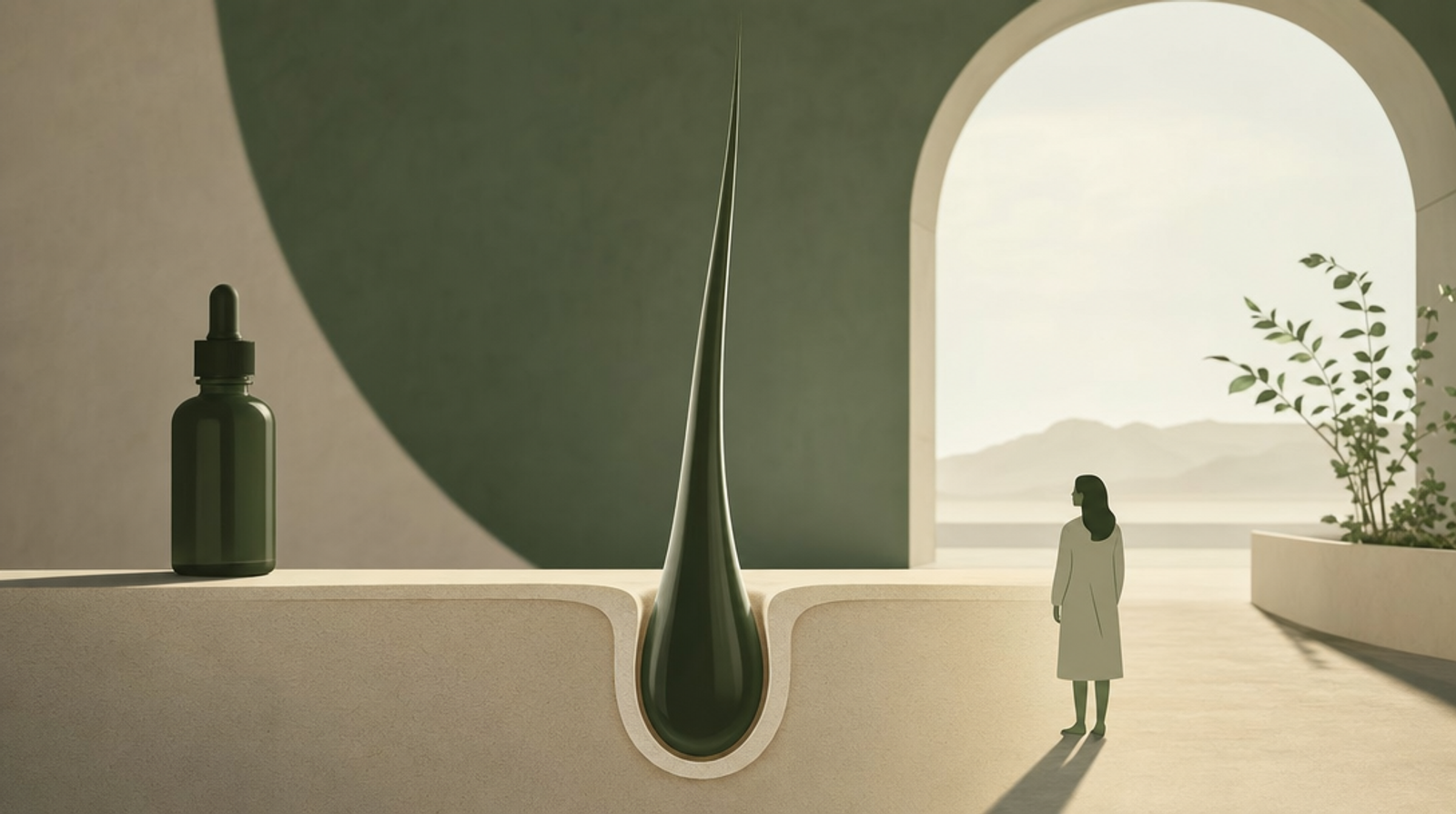
If you've been squeezing minoxidil onto your scalp for months and you're not seeing the thick regrowth you expected, you're not alone. And it doesn't mean the medication failed you. Most guys who land in my inbox or my clinic with this exact frustration are dealing with one of three things: their application technique was off, their expectations were set by before-and-after photos that don't represent the average case, or they simply need a different approach. This is the plain-language version of the conversation I have with those patients, written so you can read it at your own pace and actually understand what your options are.
What you actually need to know
- OTC minoxidil does work, but consistency and technique matter more than most people realize. Applying it once a day instead of twice, putting it on a wet scalp, or only using it on the crown (because that's what the box says) are all common reasons results underwhelm.
- "Not working" often means "working but not meeting expectations." Minoxidil's most common win is slowing or stopping further loss. Visible regrowth happens for some people, but stabilization is a real result. You just can't see what didn't fall out.
- There are stronger options beyond OTC minoxidil, and most of them are straightforward prescriptions. Oral minoxidil, finasteride, dutasteride, compounded topicals. These aren't exotic. They're the next conversation, and a dermatologist can walk you through which ones fit your situation.
- Time is the one thing you can't get back. Every month spent on something ineffective, whether that's a half-hearted minoxidil routine or rosemary oil from TikTok, is a month where follicles that could have been saved get harder to recover.
- Shedding early on is actually a good sign, not a reason to quit. This trips up a huge number of people.
Wait, am I in the right place?
This article is for you if you've been using over-the-counter minoxidil (Rogaine, Kirkland, or a generic foam or solution) for at least a few months and you're trying to figure out why it isn't delivering what you hoped, or you're wondering whether it's time to try something else.
If you haven't started minoxidil yet and you're trying to decide whether to, this guide will still give you useful context, but you might get more from a deep dive on androgenetic alopecia as a whole. If you're already on prescription treatments like finasteride or oral minoxidil and those aren't working, you're past the beginner stage. A treatment decision article comparing next-level options would be a better fit.
What's actually going on?
Minoxidil was originally a blood pressure medication. At higher doses, doctors noticed patients were growing hair on their scalp, on their arms, everywhere. Over time, it got reformulated into a topical version you apply directly to the scalp, which limits the systemic effects (no blood pressure changes for most people) while still delivering the active ingredient where it's needed.
The way it helps hair: minoxidil increases blood flow to hair follicles. More blood flow means more oxygen and nutrients reaching the follicle, which supports thicker, longer strands and can push resting follicles back into a growth phase.
What dermatologists know but don't always say plainly: topical minoxidil is genuinely tough for patients to stick with. It's messy, it can make your hair look greasy, and you're supposed to do it twice a day, every day, indefinitely. When we talk among ourselves, we understand that most patients aren't going to maintain that level of consistency. Not because they don't care, but because the routine is a lot. The medicine works. The compliance is the bottleneck.
That's why "minoxidil isn't working" often really means "minoxidil at this dose, applied this way, with this level of consistency, isn't producing the results I expected." Those are all variables you can change.
The terms you're going to hear
- Androgenetic alopecia: The medical name for the most common type of hair loss in men (and women). It's genetic, it's progressive, and it's what minoxidil is designed to treat.
- DHT (dihydrotestosterone): A form of testosterone that shrinks certain hair follicles over time. This is the hormone that drives androgenetic alopecia. Minoxidil doesn't block DHT. Finasteride and dutasteride do.
- Telogen effluvium: A different type of hair loss triggered by stress, illness, surgery, or (in women) childbirth. It can happen alongside androgenetic alopecia, which makes the picture confusing.
- Vellus hairs: The fine, short, almost invisible hairs that are often the first sign of regrowth. At the three-month mark, these are what a dermatologist looks for, not thick terminal hairs.
- Anagen phase: The active growth phase of a hair follicle. Treatments like minoxidil work partly by pushing more follicles into this phase.
- Finasteride / dutasteride: Prescription pills that lower DHT. They address the root hormonal cause of androgenetic alopecia, which minoxidil doesn't do.
- Oral minoxidil: The same active ingredient as the topical, taken as a low-dose pill. More effective for many patients, dramatically easier to use, and increasingly common in dermatology.
- Compounded topical: A custom-mixed topical solution that can combine minoxidil with other active ingredients (finasteride, dutasteride, latanoprost, others) in a single application.
What does the typical path look like?
When someone comes to me because OTC minoxidil isn't cutting it, the first thing I do is figure out what's actually happening. That means asking about how they're applying it (once or twice daily, wet or dry scalp, foam or solution, which areas), how long they've been on it, and what they're expecting.
Sometimes the fix is technique and consistency. Switching from foam to solution for better scalp contact, applying to a dry scalp, making sure they're covering the frontal hairline and not just the crown. The box only mentions the vertex, but minoxidil absolutely works on the frontal scalp too. A lot of guys don't know that.
If the technique is solid and they've given it an honest three to six months, the next conversation is about adding or switching to prescription options. That usually means one or more of these:
- Oral minoxidil. A low-dose pill, taken once a day. Easier than the topical, and in my experience, more effective. At the low doses we use in dermatology, it tends to be very safe for the right patient.
- Finasteride or dutasteride. Pills that lower DHT and address the hormonal driver of the hair loss. These can slow or stop loss and, for many patients, bring back some density over time.
- Compounded topicals. A higher-strength minoxidil (up to about 7%) sometimes combined with finasteride, dutasteride, or other ingredients in one bottle.
- Ketoconazole shampoo. Anti-inflammatory, mildly anti-androgenic, and good for creating a healthy scalp environment. Most patients don't think of it as a hair loss treatment, but it's a low-risk add-on that I find genuinely helpful.
The realistic timeline for any of these: at least three months before you can see early signs (those fine vellus hairs), and closer to six months before improvement is noticeable in photos or in the mirror. Patience is non-negotiable with hair loss treatment.
All of this, the history, the photos, the prescription, can happen through a chat consultation. A dermatologist can review close-up photos of your scalp, ask the right questions about your history, and write the prescription if it's the right call. If something about your case genuinely needs an in-person look (which is uncommon for straightforward androgenetic alopecia), your doctor can recommend that next step.
What to actually do next
- Take honest stock of your current routine. How many days a week are you actually applying? Once or twice daily? Wet scalp or dry? Crown only, or frontal hairline too? The answers matter more than most people think.
- Take a few close-up, well-lit photos of your hairline and crown right now. You'll want a baseline. Three months from now, comparing photos side by side is the only reliable way to assess progress. The mirror lies because changes are gradual.
- Stop spending money on unproven supplements and "natural" treatments. Rosemary oil, most hair-growth peptides, expensive serum subscriptions: these aren't backed by strong evidence for androgenetic alopecia. They probably won't hurt you, but every month you spend on them instead of proven treatments is a month of follicles you might not get back.
- Have a real conversation with a dermatologist about prescription options. That's the actual next step. Not another Reddit thread, not another product. A conversation with someone who can look at your specific pattern and tell you what makes sense.
If you're deciding whether to talk to a doctor
Most guys I see waited longer than they needed to. The usual reason isn't that they didn't care. It's that scheduling a dermatology appointment felt like a project: weeks-long wait, time off work, sitting in a waiting room, a fifteen-minute visit that may or may not answer the real question. So they kept Googling, kept trying OTC products, and showed up six or twelve months later wishing they'd started sooner.
On FutureClinic, the consultation is real healthcare. A real dermatologist reviewing your photos, taking your history, writing prescriptions, ordering labs if needed, just through chat. Same depth, same medicine, same doctor staying with you for follow-ups. You start it from your phone whenever you're ready, and you'll usually have a response back the same day. You can either keep trying to piece together a plan from forum posts and product reviews, or you can spend fifteen minutes in a chat with a doctor who can look at your scalp and tell you what's going on.
Common mistakes new patients make
- Quitting because of shedding. This one genuinely frustrates me. Early shedding, usually in the first few weeks to couple of months, is one of the most promising signs that the treatment is working. Those resting, miniaturizing hairs are being pushed out to make room for new growth-phase hairs. The bigger the shed, the better the response tends to be. Stopping the medication at this point means losing the opportunity right when things are about to turn.
- Only applying to the crown because that's what the box says. OTC minoxidil labeling directs you to the vertex (top of the head). But it works on the frontal scalp and temples too. If your thinning is up front and you've only been treating the back, you've been leaving the most visible area untouched.
- Applying to a wet scalp right after a shower. Water dilutes the solution and reduces how much actually absorbs into the scalp. Dry scalp, then apply. Wait for it to absorb before styling.
- Expecting a full hairline restoration in eight weeks. Three months is the minimum before early signs appear. Six months is when you can see meaningful change in photos. Twelve months is a full treatment cycle. If you're evaluating at week six, you're checking too early.
- Trying every supplement and "natural" remedy before talking to a doctor about proven prescriptions. The prescription options, oral minoxidil, finasteride, dutasteride, are often cheaper and dramatically more effective than the supplement stacks people build from social media recommendations. Every month spent on unproven products is time and follicles you don't get back.
Frequently asked questions
If I stop minoxidil, will all my hair fall out?
No. You'll gradually return to where you would have been without it, not worse. This is one of the most common myths. Stopping minoxidil means you lose the gains you made, and then hair loss continues at its natural pace, the same pace it was going before you started. You won't suddenly go bald overnight. It's the same principle as any ongoing medication: stop blood pressure medicine and your blood pressure goes back up. That doesn't mean the medicine made it worse.
Is oral minoxidil safe?
At the low doses used for hair loss, oral minoxidil is generally very safe for the right patient. The concern people hear about, effects on heart rate and blood pressure, comes from the much higher doses originally used to treat hypertension. At dermatology doses (typically 1.25 to 5 mg), I haven't seen significant cardiovascular effects in my patients, though even rare side effects are possible. Your dermatologist will review your medical history to make sure you're a good candidate [per FDA drug labeling for minoxidil].
Can minoxidil work on the front of my scalp, or just the crown?
It works on both. The OTC labeling only mentions the vertex because that's where the original clinical trials were conducted. Dermatologists routinely recommend applying it to the frontal hairline and temples as well, and for a lot of guys, that's where the thinning bothers them most.
My scalp gets really irritated from topical minoxidil. Is that normal?
It's common, not inevitable, and usually fixable. The liquid solution contains propylene glycol, which causes irritation or contact dermatitis in some people. Switching to the foam version, which doesn't contain that ingredient, resolves the irritation for most patients. If foam still bothers you, that's another reason to consider oral minoxidil. No scalp contact at all.
How do I know if my hair loss is androgenetic alopecia or something else?
Pattern and history are the main clues, but it's worth having a dermatologist confirm. Androgenetic alopecia follows a predictable pattern: receding temples, thinning crown, gradual progression. Telogen effluvium (stress-related shedding) looks different: diffuse thinning all over, often with a clear trigger like major stress, illness, or a big life change. The two can overlap, which makes it hard to sort out on your own. A dermatologist can tease apart what's contributing to your specific picture, which matters because the treatment approach can differ.
Do supplements like biotin actually help?
Biotin can make hair grow slightly faster, but it doesn't treat the underlying cause of androgenetic alopecia. If you're already on effective medical treatment, biotin is a harmless add-on. On its own, it won't stop or reverse hair loss driven by DHT sensitivity. The prescription options do far more, and they're often less expensive than the supplement stacks people build.
What about rosemary oil and other "natural" treatments?
There's very limited evidence, and the real risk is wasted time. Rosemary oil probably won't hurt your scalp, but it's not going to replace proven treatments. The problem is that every month spent hoping a home remedy works is a month where follicles that could have been saved with actual medication are getting harder to recover. If you want to use rosemary oil alongside prescription treatment, that's fine. Just don't use it instead of treatment.
Are there new treatments coming that I should wait for?
There are genuinely exciting treatments in development, but waiting without treating is the wrong move. DDPHL-01 is a reformulated oral minoxidil designed to maintain therapeutic levels without reaching doses that could affect the heart. I'm very enthusiastic about this one. PP405 is a topical that activates dormant follicles through an entirely new mechanism, with promising early results. And lab-grown hair follicles for transplant are making real progress, especially in Japan and Korea. But these are years away from availability. The best strategy right now is to start effective treatment today so you preserve as many follicles as possible. You're bridging yourself to those future options by keeping your hair in the game now.
This article is intended as educational information, not personal medical advice. For one-to-one guidance on your specific situation, talk to your own doctor, or start a chat consultation with a FutureClinic doctor and get a real, personalized answer for your case.
References
- Suchonwanit P, Thammarucha S, Leerunyakul K. Minoxidil and its use in hair disorders: a review. Drug Des Devel Ther, 2019;13:2777-2786.
- Randolph M, Tosti A. Oral minoxidil treatment for hair loss: a review of efficacy and safety. J Am Acad Dermatol, 2021;84(3):737-746.
- Zito PM, Bistas KG, Syed K. Finasteride. StatPearls. StatPearls Publishing, 2024.
- Olsen EA, Dunlap FE, Funicella T, et al. A randomized clinical trial of 5% topical minoxidil versus 2% topical minoxidil and placebo in the treatment of androgenetic alopecia in men. J Am Acad Dermatol, 2002;47(3):377-385.
- American Academy of Dermatology. Hair loss: diagnosis and treatment. AAD, 2024.
Frequently asked questions
- Why isn't my OTC minoxidil working?
- The most common reasons are application technique issues (applying to a wet scalp, using it once instead of twice daily, or only targeting the crown), expectations set by atypical before-and-after photos, or simply needing a stronger treatment. Minoxidil's primary win for many people is slowing further loss, not dramatic regrowth.
- Is shedding after starting minoxidil a bad sign?
- No — early shedding is actually a sign the medication is working. Minoxidil pushes resting follicles back into an active growth phase, which first sheds the old resting hairs. Most people who quit during this phase do so unnecessarily.
- What are the prescription options if OTC minoxidil isn't enough?
- The main next steps are oral minoxidil, finasteride, dutasteride, and compounded topicals that combine multiple active ingredients. These are straightforward prescriptions, not experimental treatments, and a dermatologist can advise which fits your pattern of loss.
- How is oral minoxidil different from the topical version?
- Oral minoxidil is taken as a low-dose pill rather than applied to the scalp. It delivers the active ingredient systemically, which some people find more effective and easier to stay consistent with than a daily topical routine.
- Does stabilising hair loss count as minoxidil working?
- Yes. Slowing or stopping further loss is a clinically meaningful result, even if visible regrowth doesn't occur. Because you can't see the hairs that didn't fall out, stabilisation is easy to undervalue — but it's a real outcome.
- How long should I give minoxidil before deciding it isn't working?
- Most dermatologists recommend at least four to six months of consistent, correct use before drawing conclusions. Hair growth cycles are slow, and judging results too early — especially during the initial shedding phase — leads many people to quit prematurely.
Related articles

When OTC Acne Products Stop Working, What Should You Actually Do Next?
Most OTC acne products don't stop working; they were never matched to the right type of acne in the first place. Here's how to tell when you've given them a fair shot and what a dermatologist can actually do differently.
OTC Acne Products vs. Prescription Acne Treatment: How to Know When You Need a Dermatologist
Cycling through drugstore acne products without results usually isn't a product problem; it's a signal that your acne has outgrown what OTC can offer. Here's how to tell where you sit on that line, and what the prescription tier actually adds.
Acne: A Complete Dermatologist's Guide
Acne isn't one condition; it's at least three, and treating the wrong subtype is why most OTC products seem to stop working. This guide covers how to identify comedonal, inflammatory, and hormonal acne, and what prescription treatment looks like when it's done right.

Why Did My Acne Products Stop Working? A Dermatologist Walks Through It
Cycling through drugstore acne products without results usually isn't a product problem; it's a targeting problem. A dermatologist breaks down why most OTC routines stall and what it takes to actually clear your skin.