Do You Have Bad Headaches, or Do You Actually Have Migraines?
Recurring headaches that come with nausea, light sensitivity, or brain fog are often migraines that have never been properly diagnosed. Migraines are a neurological condition, not just a bad headache, and the treatments that actually work are very different from the ibuprofen most people rely on.

Medically reviewed by Dr. Rowan Casey-Ford, MD · Updated August 2026
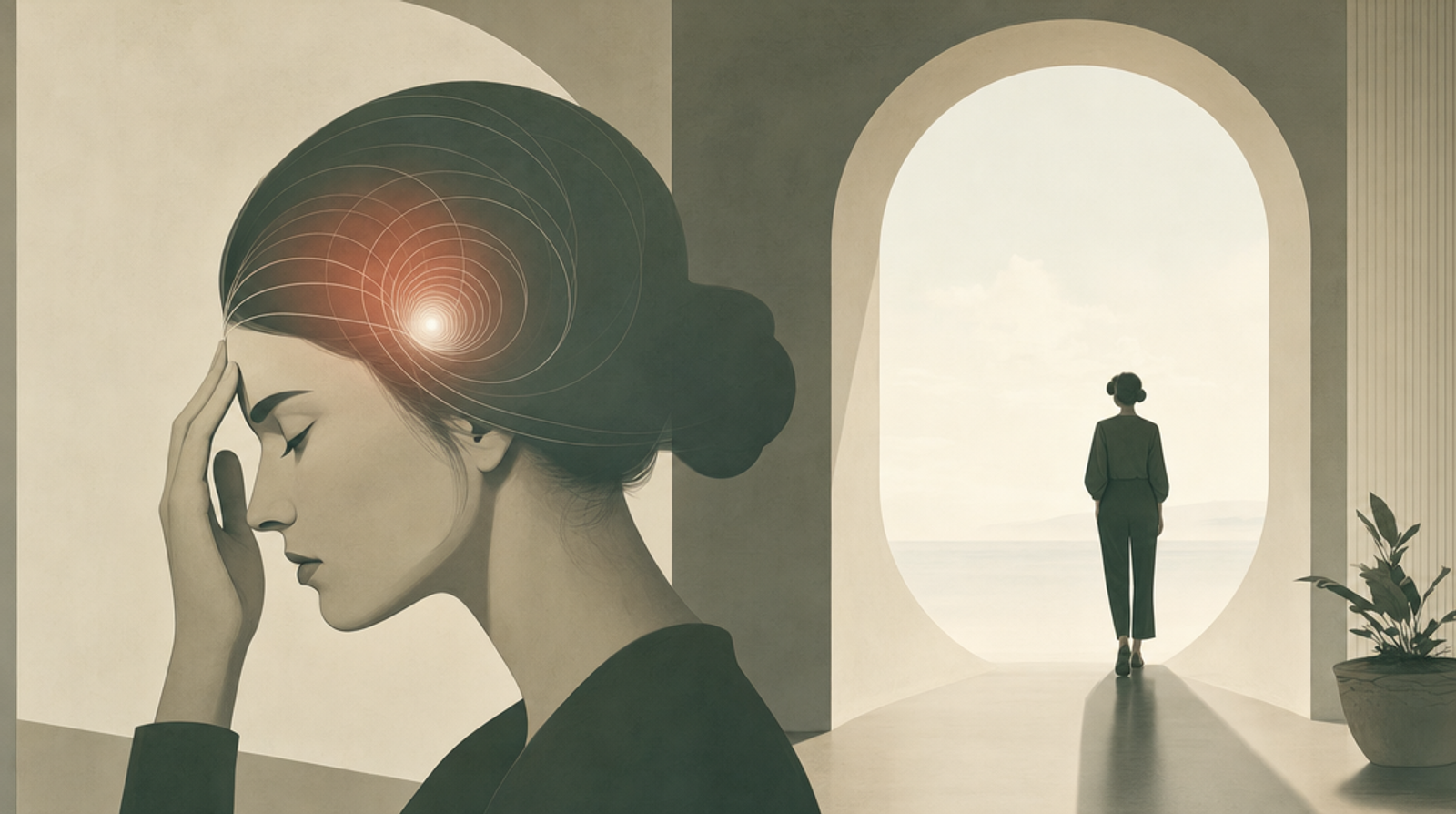
Many people with "bad headaches" that keep coming back actually have migraines. They just have never been diagnosed.
The short answer
If your headaches come with nausea, sensitivity to light or sound, fatigue, brain fog, or the feeling that moving around makes everything worse, you almost certainly have migraines. Migraines are not just a pain in your head. They're a neurological condition with specific treatments that work far better than the ibuprofen and Excedrin you've been relying on for years. The distinction matters because the treatment is completely different.
What's actually going on?
A regular headache is pain in your head. You can get one from dehydration, a rough night of sleep, staring at a screen too long. It hurts, you take something, it goes away. Anyone can get one at some point. A migraine is a fundamentally different process. It's not just an ache from a hard day or night of work, its a neurological process, literally a type of storm in your brain.
When a migraine starts, a wave of abnormal electrical activity spreads across your brain. That wave activates your trigeminal nerve system, which floods the area with inflammatory signals, especially a substance called CGRP (calcitonin gene-related peptide). Your brain's ability to calm pain signals down gets overwhelmed. Normal sensations become unbearable. Light hurts. Sound hurts. Going up a flight of stairs makes your head pound.
The fatigue, the brain fog, the nausea, the feeling that you can't think straight: those aren't side effects of the headache. They're part of the same neurological process. This is why Tylenol is mostly useless and why ibuprofen and Excedrin sort of work and then somehow seem to start making your headaches worse. You've been treating a neurological condition with a pain reliever. It's the wrong tool.
Roughly 1 in 5 women of reproductive age has migraines [per the American Migraine Foundation]. The condition is diagnosed clinically. There's no scan that lights up and says "migraine." It shows up as pain, decreased function, and sensitivity in a patient who is often told she's stressed, not sleeping enough, not drinking enough water or "just being dramatic". That framing is wrong. It's also everywhere.
When does the answer change?
For a small number of people, what feels like a migraine is actually something else. If your headaches started suddenly and recently, if they're dramatically different from anything you've had before, or if they come with vision changes, numbness, weakness, or balance problems, those need urgent evaluation. That's an emergency room visit, not a chat.
But the far more common scenario is the opposite. You've had these headaches for years. You've been told they're tension headaches or sinus headaches. Nobody has really sat down and asked: Do lights and sounds bother you? Does squatting down or walking up stairs make it worse? Even if you aren't vomiting in a dark room, do you feel like you'd really rather not see food ever again? If you keep having bad headaches, they last for hours, they make your head pound or they feel worse when you walk or climb stairs, and they make you nauseated or lights and sounds bothers you, you meet criteria for migraines. Yes - you may have allergies, and yes, you may have a stiff neck and, yes, those things may be making your headaches worse, but have you ever noticed that the world is full of people with allergies and neck tension who do not have horrendous headaches?
The fact is that most people who have migraines have been misdiagnosed or simply never diagnosed at all. A U.S. study found that only 26.3% of people with episodic migraine which was adversely affecting their ability to function in their daily lives had consulted a healthcare professional, received a migraine diagnosis, and were using migraine-specific acute treatments. The level of diagnosis is so low that it lead the American Headache Society to advocate (unsuccessfully) for universal screenings for migraine headaches in reproductive age women. Take a moment and let that sink in - the American Headache Society concluded that migraines are so common, and we in primary care are doing such a poor job diagnosing them, that it would work out better if we just gave a screening questionnaire asking about migraine specific symptoms to every single woman between roughly the ages of 15 and 45.
(A note for men: There is a lot going on in this article about "reproductive aged women". You may feel left out. Statistically, 75% of people with migraine headaches are women. Put another way though, one out of every four migraine sufferers is a man - and the female predominance actually also results in underdiagnosis for men. So don't hesitate to take the next step if you feel like this article describes your headaches!)
What should you actually do?
Pay attention to what happens during your headaches beyond the pain. Do you feel sick to your stomach? Does moving around make it worse? Do you want the lights off? Does sound bother you? Are you exhausted or foggy for hours afterward? How often do you have headaches? How long do they last? Write that down. Those details are the difference between a five-minute "take some Tylenol" visit and a diagnosis that changes how you feel most days.
Stop blaming yourself. There's a lot of content out there implying you could prevent migraines if you just reduced stress, ate an anti-inflammatory diet, did the right yoga, and drank the right tea. That framing blames the patient for a neurological condition. People living extremely healthy lifestyles still have terrible migraines. You didn't cause this by being insufficiently virtuous.
Know the OTC trap. Ibuprofen, naproxen, and Excedrin Migraine can all work for individual episodes. But if you start to rely on them to get through your day, most days, the medication itself generates the next headache, which makes you take more, which generates another one. If you're caught in that cycle, the fix isn't a better over-the-counter option. It's a conversation about migraine-specific treatment.
Lifestyle factors that actually move the needle: Your migraine brain loves consistency. If you possibly can, go to sleep at the same time, and wake up at the same time. Do you love coffee? Great! Me too! Have the same amount of coffee (preferably 1-3 cups and not 7) at the same time of day, in the morning. Eat food - there is no magic diet formula, but your migraine brain hates wild blood sugar swings and skipped meals, so eating consistent meals at consistent times that contain real food items with recognizable ingredients is helpful.
When is this worth bringing to a doctor?
If your headaches seem to be happening more and more often, if over-the-counter medications aren't cutting it anymore, if you're dragging yourself through the day wondering why you feel this bad, that's worth a real conversation with a doctor who will actually ask the right questions.
That conversation is a chat consultation with a real doctor: diagnoses, prescriptions, the actual clinical call on what to do next. You start it from your phone whenever you're ready. You'll usually have a response back the same day. No scheduling, no waiting room, no taking time off work.
This article is intended as educational information, not personal medical advice. For guidance on your specific situation, talk to your own doctor, or start a chat consultation with a FutureClinic doctor and get a real, personalized answer for your case.
Frequently asked questions
Do I need a brain scan to find out if I have migraines?
Usually not. Migraines are diagnosed based on your symptoms and history, not imaging. That said, there's a low threshold to do a scan once, especially if your headache pattern changes or if there are any red-flag features like sudden onset, neurological symptoms, or a headache that's dramatically different from your usual pattern.
Can migraines go away on their own?
For some people, they improve over time. But for many people, migraines are a chronic condition that benefits from active management. "Chronic" doesn't mean "untreatable." With the right plan, most people go from migraines running their life to migraines being a minor inconvenience.
Is it true that certain foods cause migraines?
Foods are a trigger for some people, but the blanket food-elimination lists floating around the internet are mostly unhelpful. If you genuinely suspect a food trigger, track what you ate before your headaches and look for a real pattern. Preemptively cutting out gluten, dairy, aged cheese, chocolate, and citrus because an internet list told you to usually just makes you stressed and hungry, which, ironically, is more likely to trigger a migraine than the cheese you gave up.
Are there prescription medications specifically for migraines?
Yes, and they're not just pain medications. Triptans (like rizatriptan and sumatriptan) work specifically on the migraine process and can abort an episode in progress. For people with frequent migraines, daily preventive medications like propranolol, amitriptyline, or topiramate can reduce how often migraines happen by 50% or more [per AHS treatment guidelines]. Which one fits depends on your other health conditions and what side effects you can tolerate. That's exactly the kind of thing a doctor should walk through with you personally.
What if I have already tried a preventive medication and it did not work?
Most "failures" with preventive medications are actually process failures, not medication failures. The dose was never increased to a level that actually prevents migraines, the refills lapsed, or nobody told the patient that the first medication might not be the right one. A real trial of a preventive takes about three months at a therapeutic dose. Many people need to try two or three before landing on the one that works. Having a doctor who stays with you through that process and adjusts along the way can make all the difference.
References
- Burch RC, Buse DC, Lipton RB. Migraine: epidemiology, burden, and comorbidity. Neurol Clin, 2019;37(4):631-649.
- Charles A. The pathophysiology of migraine: implications for clinical management. Lancet Neurol, 2018;17(2):174-182.
- American Headache Society. The American Headache Society position statement on integrating new migraine treatments into clinical practice. Headache, 2019;59(1):1-18.
- Dodick DW. A phase-by-phase review of migraine pathophysiology. Headache, 2018;58(Suppl 1):4-16.
- Lipton RB, Bigal ME, Diamond M, et al. Migraine prevalence, disease burden, and the need for preventive therapy. Neurology, 2007;68(5):343-349.
- Schwedt TJ, Starling AJ, Ailani J, et al. Routine migraine screening as a standard of care for Women's health: A position statement from the American Headache Society. Headache. 2026; 66: 511-516. doi:10.1111/head.70023
Related articles

Should You Just Put Up With Birth Control Side Effects?
If your only answer to birth control side effects is "give it three months," you may be missing a better option. Different hormonal formulations affect the body differently, and switching can be targeted, not guesswork.

Why Does My Birth Control Make Me Feel Terrible? A Family Medicine Doctor Walks Through It
Feeling off on birth control is common, but the cause depends on which hormone is driving your specific symptoms. A family medicine doctor breaks down estrogen versus progestin side effects, when switching formulations helps, and when to seek urgent care.

Why Isn't My Antidepressant Working?
Most antidepressants that "don't work" were never given a real chance: the dose was too low, the timeline too short, or no one followed up to adjust. Here's what's actually going wrong and what a proper medication review looks like.