

Acne: A Dermatologist's Honest Guide
Most acne treatment fails not because the medications don't work, but because people quit too early, apply them wrong, or never get on the right regimen. Here's what a dermatologist actually recommends, from first-line topicals to isotretinoin.

Medically reviewed by Dr. Dennis Porto · Updated August 2026
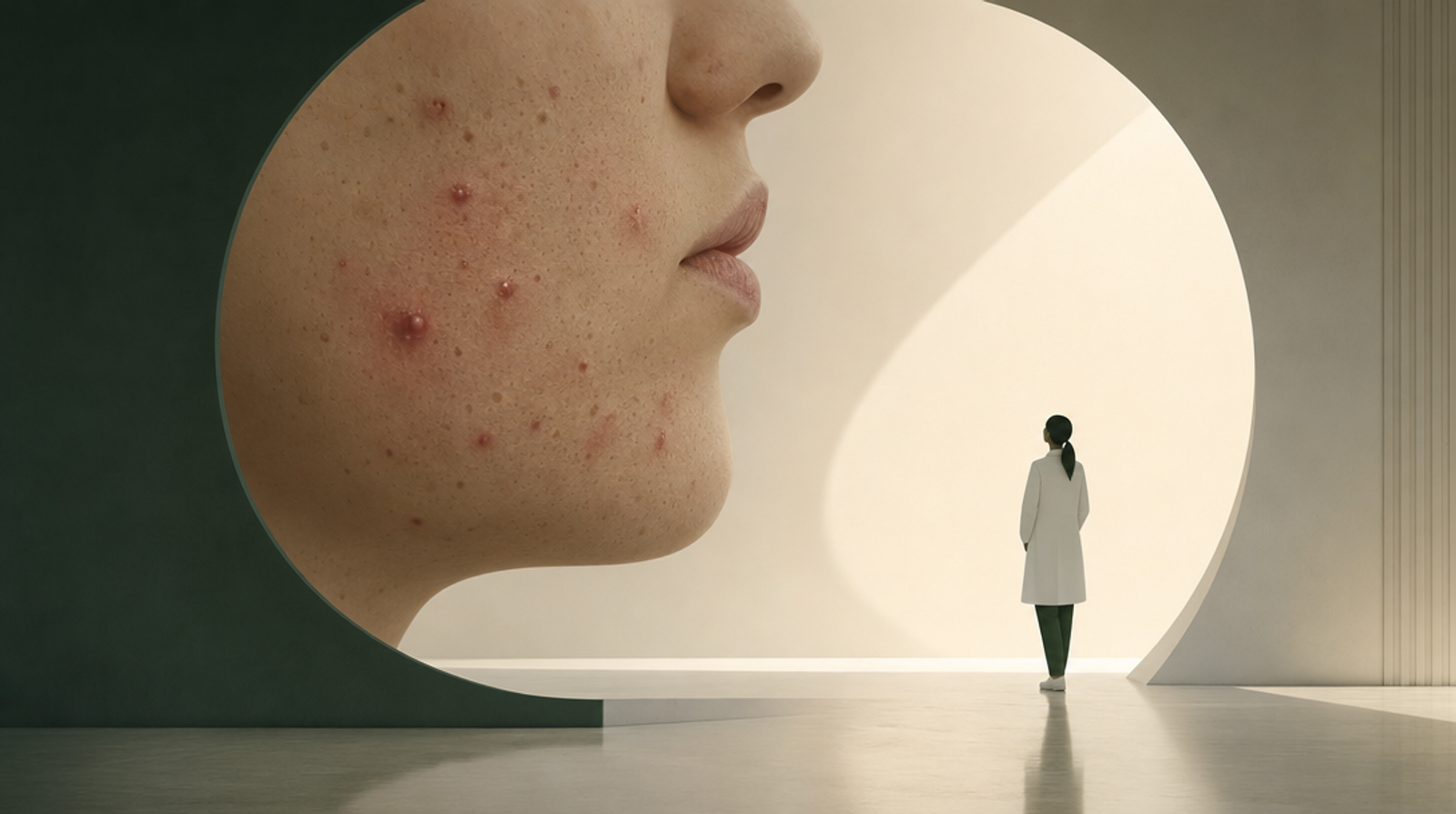
Acne is one of the most undertreated conditions in dermatology. Not because we lack good medications. We have several that work extremely well. The problem is that most people either quit treatment too early, use their medications wrong, or never get on the right regimen in the first place. If your acne treatment isn't working, the answer is almost always fixable. This is the complete picture: what acne actually is at the skin level, why treatments take as long as they do, what's worth trying, and how to tell whether what you're doing is actually working.
The short version
Acne is a chronic inflammatory skin condition driven by excess oil production, clogged pores, bacterial overgrowth, and hormonal fluctuations. Nearly everyone gets some form of it, but the severity and the best treatment path vary widely from person to person. The standard first-line treatments are topical retinoids (like tretinoin), benzoyl peroxide, and topical antibiotics (like clindamycin), applied to the entire face, not dabbed on individual spots. Most people see meaningful improvement by weeks 8 to 12, but the first few weeks can look worse before they look better, especially with retinoids. For moderate-to-severe acne or acne that's already scarring, isotretinoin is the most effective treatment available. The biggest reasons treatment "fails" are quitting too early, incorrect application, or treating something that isn't actually acne. With the right regimen and enough patience, basically any acne can be treated into remission using inexpensive generic medications.
Table of contents
- What acne actually is
- Who gets it (and why it's so often undertreated)
- The signs and symptoms, and what they're often confused with
- How is acne diagnosed?
- Treatment landscape
- What treatment actually feels like, week to week
- Side effects, monitoring, and how the plan adjusts
- Lifestyle and self-management: what actually moves the needle (and what doesn't)
- Complications and what to watch for
- When to seek care vs. wait it out
- The honest take
- Frequently asked questions
What acne actually is
Acne starts in the pilosebaceous unit, the tiny structure in your skin that contains a hair follicle and an oil gland. Your oil glands produce sebum, which normally travels up through the pore and onto the skin surface. That's fine. The problem starts when three things go wrong together.
First, the cells lining the inside of the pore start sticking together instead of shedding normally. This creates a plug. Second, the oil gland keeps producing sebum behind that plug, and now there's nowhere for it to go. Third, a bacterium called Cutibacterium acnes, which lives on everyone's skin, starts feeding on the trapped sebum and multiplying. Your immune system notices, sends inflammatory cells to the area, and now you have a red, swollen, painful bump.
What most people don't realize: your epidermis, the outer layer of skin, turns over roughly every 28 to 40 days. The skin you're looking at right now started forming about a month ago. When you start an acne treatment, it's changing the behavior of the new skin cells being produced underneath. But the old skin, already inflamed, already clogged, has to work its way out on its own timeline. You can't speed that up. The treatment is working on the factory floor, not the showroom. That's why it takes weeks to months, not days.
Hormones are the upstream driver for most people. Androgens, the hormones that increase during puberty, fluctuate with menstrual cycles, and remain active throughout adulthood, directly stimulate oil production. More oil means more fuel for the whole process. This is why acne often flares around periods, why it's common in teenagers, and why it can persist well into your 30s and 40s.
Who gets it (and why it's so often undertreated)
Acne affects roughly 85% of people between the ages of 12 and 24 [per AAD clinical guidelines]. But it's not just a teenage problem. Adult acne, particularly in women, is increasingly common, with studies showing prevalence rates of 12–22% in adult women [per Bhate & Williams, Br J Dermatol, 2013]. Men tend to get more severe acne during adolescence, while women are more likely to deal with persistent or late-onset acne that shows up along the jawline and chin.
The reason acne is so often undertreated has nothing to do with the medicine. It's that people don't think it's "bad enough" to see a doctor. They assume acne is cosmetic, not medical. They try drugstore products for months, get frustrated, and either give up or conclude their skin is uniquely resistant. Almost always, it's not. What's missing is the right medication used the right way.
The other pattern I see constantly: people who were prescribed the right medication but never told how to use it. Spot treatment is the most common mistake. Patients dab clindamycin or benzoyl peroxide directly onto individual pimples, like putting a bandage on a cut. But acne medications don't work that way. They work by changing the environment across the entire skin surface, preventing new lesions from forming, not just treating the ones you can already see. If you're only applying to spots, you're missing the point entirely.
There's also a quieter dimension that patients rarely bring up first. Acne affects confidence in ways that go well beyond the skin. People cancel plans because of a flare. They avoid eye contact. They feel like everyone is staring. That emotional weight matters clinically. It changes how aggressively I treat, and it changes the conversation about what's worth trying next. I wish more patients felt comfortable saying that out loud, because it genuinely influences the plan.
The signs and symptoms, and what they're often confused with
Acne presents across a spectrum, and not everything that looks like acne is acne. Getting this wrong means months of treating the wrong condition.
-
Comedones (blackheads and whiteheads). These are the non-inflammatory starting point: clogged pores that haven't yet triggered an immune response. Blackheads are open comedones (the dark color is oxidized sebum, not dirt). Whiteheads are closed. These are the most reliable sign that you're dealing with true acne vulgaris. Conditions like milia can look similar, tiny white bumps usually around the eyes and cheeks, but milia are keratin cysts trapped under the skin and won't respond to acne treatments at all.
-
Papules and pustules. Red bumps (papules) and red bumps with a white or yellow center (pustules) are the inflammatory phase. This is what most people picture when they think "acne." The confusion here is with rosacea, particularly the papulopustular subtype, which produces red bumps and pustules across the central face. Rosacea tends to spare the forehead and jawline, doesn't produce comedones, and often comes with background redness and flushing. Treating rosacea with standard acne medications can make it worse.
-
Nodules and cysts. Deep, painful bumps that sit under the skin surface. These are the presentations most likely to scar. Nodular and cystic acne is often confused with boils (furuncles), which are bacterial infections of hair follicles caused by Staphylococcus aureus, not by the acne pathway. The treatment is completely different.
-
Post-inflammatory hyperpigmentation (dark marks). These aren't active acne. They're the aftermath. Flat, discolored marks left behind after a pimple resolves. They're often confused with acne scars, but they're not scars. They fade over time, especially with sun protection and topical treatments like retinoids. True acne scars are textural changes (pitted, raised, or rolling) that don't fade on their own.
-
Sebaceous hyperplasia. Small, yellowish, dome-shaped bumps, usually on the forehead and cheeks. These are enlarged oil glands, not clogged pores. Acne treatments won't touch them. I've seen patients use retinoids on these for months before someone identifies what they actually are.
-
Flat warts. Small, flat-topped bumps that can spread across the forehead or cheeks. They're caused by HPV, not by clogged pores. Patients sometimes treat these with acne products for months before anyone looks closely enough to realize they're warts, not pimples.
If your "acne" isn't responding to anything you've tried, one possibility worth taking seriously is that it's not acne.
How is acne diagnosed?
Acne is diagnosed clinically, meaning the diagnosis is based on what the skin looks like, the distribution of the lesions, and the patient's history. There's no blood test for acne. There's no biopsy needed in the vast majority of cases.
What matters most for getting the diagnosis right is a clear look at the skin and a detailed history. Where are the breakouts? When did they start? What have you tried? How are you using your current products? Are you seeing comedones, or just inflammatory bumps? Is there a hormonal pattern, flares around your period, worsening with stress? These questions do more diagnostic work than any lab.
Most of what matters for diagnosing acne is doable through chat. You send photos of your skin, close-ups of the affected areas in good lighting, and walk through your history. In my experience, that's enough to distinguish acne from its look-alikes in the majority of cases. For most presentations, the realistic path is to start treatment for the most likely diagnosis based on what I see and what you describe. How you respond confirms the working diagnosis or tells us to pivot. That response itself is diagnostic: if your skin clears on a standard acne regimen, we've confirmed the diagnosis. If it doesn't respond as expected, that's when we look harder at the alternatives.
For women with acne patterns suggestive of a hormonal driver, jawline-predominant breakouts, flares tied to the menstrual cycle, signs of elevated androgens like thinning hair or irregular periods, labs can be useful. A hormonal panel (testosterone, DHEA-S, sometimes a full androgen workup) can clarify whether there's an underlying hormonal contributor worth addressing directly.
If we can't sort it out from history, photos, and a treatment trial, your FutureClinic doctor can recommend in-person care for that piece. But in most presentations of acne, we resolve this through chat first.
Treatment landscape
Acne treatment breaks into tiers, and the right starting point depends on severity, scarring risk, and what you've already tried.
First-line topicals. The workhorses are tretinoin (a retinoid that normalizes skin cell turnover and prevents new comedones from forming), benzoyl peroxide (kills C. acnes bacteria without building resistance), and topical clindamycin (an antibiotic that reduces inflammation). These are almost always used together, not as monotherapy. The classic combination is tretinoin at night and clindamycin/benzoyl peroxide in the morning. All three are available as cheap generics, and they work.
Oral antibiotics. When topicals alone aren't enough, usually for moderate inflammatory acne, oral antibiotics like doxycycline are the next step. They work by reducing the bacterial load and dampening inflammation systemically. The goal is a defined course (typically 3–6 months), not indefinite use, because long-term antibiotic use carries real downsides including resistance and gut microbiome disruption.
Hormonal therapy. For women with a clear hormonal component, spironolactone is an effective option. It blocks androgen receptors, reducing oil production at the hormonal level. It's not a first-line treatment for everyone, but for the right patient, persistent adult acne, jawline distribution, hormonal flare pattern, it can be the piece that makes everything else work.
Isotretinoin. The most effective acne treatment that exists. It's the only medication that addresses all four pathogenic factors simultaneously: it shrinks oil glands, normalizes cell turnover, reduces bacterial colonization, and has anti-inflammatory effects. A typical course is 5–7 months, and for the majority of patients, it produces long-term remission. It requires monitoring (monthly labs, pregnancy prevention in women of childbearing age), but with appropriate supervision from a board-certified dermatologist, it's safe.
I personally push back on the standard stepladder approach when a patient is already scarring. The consensus says you start with topicals, wait, escalate to oral antibiotics, wait again, and only then consider isotretinoin. But scarring is permanent. If I'm looking at someone whose acne is leaving marks that won't resolve on their own, I think it's completely reasonable to have the isotretinoin conversation early rather than spending six months on a stepladder while the scarring gets worse. Different doctors have different thresholds for this, and that's a legitimate clinical choice. The evidence supports more than one approach.
The other thing worth naming: acne treatment shouldn't be expensive. Generic tretinoin, generic clindamycin, generic doxycycline, generic isotretinoin. These are the medications that actually work, and they cost a fraction of what branded products charge. The expensive serums and acne "systems" at Sephora are usually not adding anything meaningful over what a $15 generic already does. On this platform, the doctor charges for the consultation, not the prescription, so the recommendation reflects what fits your skin, not what's on a formulary.
What treatment actually feels like, week to week
This is the section most acne articles skip, and it's the one that matters most for actually sticking with treatment.
Weeks 1–3. Honestly, not much visible change. If you're starting tretinoin, you'll likely experience some dryness, flaking, and mild irritation as your skin adjusts. You might also see purging: new breakouts surfacing as accelerated cell turnover pushes material that was brewing under the surface up and out faster. This is the phase where most people panic and quit. The skin can genuinely look worse before it looks better. That's not the treatment failing. That's the treatment working on a timeline your eyes haven't caught up to yet.
Weeks 4–8. Slow, steady improvement. New breakouts become less frequent. Existing ones start resolving faster. The skin texture starts shifting: pores look less congested, the overall surface feels smoother. This is where you start to see the treatment doing something, even if you're not clear yet. The early sign I look for is whether the rate of new breakouts slows down. You might still have existing spots resolving, but if fewer new ones are forming, the treatment is working.
Around week 8. This is where I reassess. Maybe we increase the tretinoin concentration, add a second agent, or tweak the routine based on how the skin is responding. If there's been no improvement at all by this point, not just "not perfect" but genuinely no change, that's information. It means we either need to escalate, or we need to reconsider the diagnosis.
Weeks 8–12. Continued improvement. Most patients on the right regimen are noticeably better by this point. Not necessarily perfect, but clearly trending in the right direction. The texture is smoother, the inflammatory lesions are less frequent and less severe, and the overall complexion is more even.
Months 3–6. This is where the compounding effect really shows. Skin that's been on a consistent retinoid for several months looks fundamentally different: fewer breakouts, improved texture, reduced post-inflammatory marks. For patients on isotretinoin, this is typically mid-course, and the improvement is often dramatic.
On FutureClinic, that trajectory isn't a one-shot conversation. Your same doctor is in the chat as you experience it, so adjustments happen as the response unfolds, not at the next six-month visit.
Side effects, monitoring, and how the plan adjusts
Every effective acne treatment has a side-effect profile. The goal isn't to avoid side effects entirely. It's to manage them so they don't derail the treatment.
Tretinoin. The most common side effects are dryness, peeling, redness, and sun sensitivity. These are dose-dependent and typically peak in weeks 2–6. For most people, the skin acclimates: the irritation fades as your skin adjusts to the increased turnover rate. If peeling persists past week 8, the concentration is probably too high for your skin's barrier. The fix is simple. Step down to a lower concentration, buffer with moisturizer, or reduce application frequency to every other night.
Benzoyl peroxide. Dryness and occasional contact irritation. It also bleaches fabric: towels, pillowcases, shirts. That's not a medical side effect, but it's the one patients complain about most. Start with 5% rather than 10%. The antibacterial efficacy is comparable, and the irritation is lower [per a randomized trial in J Am Acad Dermatol, Mills et al., 1986].
Oral doxycycline. GI upset (nausea, stomach discomfort) is the most common complaint. Taking it with food and a full glass of water helps. Photosensitivity is real: you'll burn more easily on doxycycline, so sunscreen becomes non-negotiable. Rarely, it can cause esophageal irritation, which is why you should never take it right before lying down.
Spironolactone. Can cause light-headedness (it's a mild diuretic), breast tenderness, and irregular periods in the first few months. Potassium levels need periodic monitoring because spironolactone is potassium-sparing. These side effects are generally manageable and often settle after the first couple of months.
Isotretinoin. Dry skin, dry lips, dry eyes. These are nearly universal and expected. They're managed with aggressive moisturization and lip balm, not by stopping the medication. Joint and muscle aches can occur, especially with physical activity. Mood changes are discussed frequently online. The evidence is mixed, but it's something I monitor for actively in every patient. Monthly labs are required (liver function, lipids, and in women of childbearing age, pregnancy testing). The monitoring protocol exists because the risks are real, but with proper supervision, they're well within what we consider manageable in medicine.
The through-line across all of these: side effects are expected, manageable, and not a reason to stop treatment without talking to your doctor first. Most treatment "failures" I see aren't failures at all. They're patients who experienced a predictable side effect, panicked, and stopped the medication without checking in.
Lifestyle and self-management: what actually moves the needle (and what doesn't)
I'm going to be honest about what matters here and what doesn't, because the internet has convinced people that acne is a lifestyle disease. For most people, it's not.
What actually matters:
-
Consistent medication use. This is the most important factor. Consistency is the most important part of improvement, and it's entirely under your control. Not the brand. Not the ingredient list. Not the $80 serum. Just doing the same thing every day and not quitting when it doesn't work in a week.
-
Gentle skincare. When acne isn't improving, the instinct is to scrub harder, use harsher products, add more actives. That almost always makes things worse. A gentle cleanser, a simple moisturizer, and sunscreen. That's it. Your acne treatment is doing the heavy lifting. Your skincare routine's job is to not get in the way.
-
Sleep. Sleep deprivation increases cortisol. Cortisol increases oil production. More oil feeds the acne cycle. This isn't vague wellness advice. It's a direct hormonal input. Getting consistent, adequate sleep genuinely changes how your skin responds to treatment.
-
Stress management. Stress drives acne through the same cortisol pathway. I specifically recommend meditation, not because I'm being hand-wavy about it, but because patients who find a way to manage their stress often see their skin respond better to the same treatment that wasn't working before.
What probably doesn't matter as much as the internet says:
-
Diet. The internet is full of claims about dairy, sugar, and gluten. There's some very preliminary research suggesting high-glycemic diets might play a minor role for some people. But for the vast majority of patients, diet is not the driver. Overhauling your diet instead of starting an actual acne treatment is, in most cases, delaying the thing that would actually help.
-
Facials. I know people love them. They feel great. But for acne, they often don't help, and aggressive extractions can cause more inflammation. If your acne isn't responding to what you're doing, a spa facial is not the next step.
Complications and what to watch for
The most significant complication of acne isn't an infection or a systemic problem. It's scarring.
Acne scars are permanent textural changes in the skin: ice-pick scars (deep, narrow pits), boxcar scars (broad depressions with sharp edges), rolling scars (wave-like undulations). Once they form, they don't resolve on their own. They can be improved with procedures (laser resurfacing, microneedling, chemical peels, subcision), but prevention is always better than treatment after the fact.
The patients who end up with the most scarring are almost always the ones who delayed treatment the longest. They tried drugstore products for a year. They assumed it would go away on its own. They were told to "just wash their face more." By the time they see a dermatologist, the damage is done. This is the pattern I see over and over, and it's what drives me to push for earlier, more aggressive treatment when the clinical picture warrants it.
Post-inflammatory hyperpigmentation, the flat discolored marks left behind after a pimple heals, is not scarring. It fades over weeks to months, especially with sun protection and continued retinoid use. But it's distressing for patients, particularly those with darker skin tones where the marks are more visible and take longer to resolve.
The psychological impact of persistent acne is also a real complication. Studies consistently show associations between acne and depression, anxiety, and reduced quality of life [per Hazarika & Rajaprabha, Indian Dermatol Online J, 2016]. This isn't separate from the medical management. It's part of it.
When to seek care vs. wait it out
Emergencies first. Acne itself is not a medical emergency. But if you develop sudden, severe facial swelling, difficulty breathing, or signs of a widespread skin infection (rapidly spreading redness, warmth, fever, red streaking), go to the nearest emergency room or call 911. These are not acne. They're separate conditions that need immediate attention. Don't start a chat consultation for these.
The middle tier, where most people get stuck. You've been dealing with breakouts for weeks or months. You've tried a few products. Nothing is really working, but it doesn't feel "bad enough" to see a doctor. This is the tier that most often gets ignored, and it's worth being honest about why. Most people skip care here because of cost and inconvenience, not because the question doesn't deserve a doctor's attention. Taking time off work, scheduling weeks out, sitting in a waiting room, paying a copay to hear "use benzoyl peroxide." Those are the actual barriers. And people end up self-treating with products that aren't right for their skin type, their acne subtype, or their severity level. The frequent result is months of frustration, because what looked like simple acne might actually be rosacea, sebaceous hyperplasia, flat warts, or a hormonal pattern that needs a different approach entirely. That frustration is avoidable when asking a doctor doesn't require time off work and a waiting room.
The FutureClinic chat consultation is real healthcare: real diagnoses, prescriptions, labs, just through chat, between you and a doctor. Same medicine, same depth, same doctor staying with you afterwards. What's different is that you start it from your phone whenever you're ready, and most replies come back the same day. You can either keep trying to figure this out yourself with product reviews and Reddit threads, or you can spend fifteen minutes in a chat with a real dermatologist who can look at your photos, figure out what you're actually dealing with, and write the prescription if that's where this lands. No booking, no video calls, no waiting weeks.
The "I can manage this with information" tier. If you have mild comedonal acne, a few blackheads and whiteheads, no inflammatory bumps, no scarring, and you haven't tried anything yet, benzoyl peroxide 5% applied to the full face (not spot-treated) is a reasonable starting point. Give it 8 weeks of consistent daily use before deciding it's not working. If it's not moving the needle at that point, it's time to talk to a doctor.
The honest take
What I want every acne patient to understand before anything else: basically any acne can be treated into remission with generic medications. That's not a sales pitch. It's what the evidence supports and what I see in practice.
The reason most people's acne treatment "isn't working" falls into one of three buckets. They quit too early, gave it three or four weeks, didn't see a dramatic change, and assumed it failed. They're using the medication wrong, spot-treating instead of full-face application. Or they're treating the wrong thing entirely, something that looks like acne but isn't.
The skincare industry has convinced people that effective treatment requires expensive products. It doesn't. Generic tretinoin, generic benzoyl peroxide, generic clindamycin. Boring, cheap, effective. Your skin doesn't know the difference between brand-name tretinoin and generic tretinoin, and neither does your wallet need to.
The other thing I'll say plainly: if your acne is scarring, don't wait. The stepladder approach, start with topicals, wait three months, try oral antibiotics, wait three more months, then maybe consider isotretinoin, makes sense for mild acne. It doesn't make sense when you're accumulating permanent scars while working through the ladder. Scarring is permanent. I wish more providers were willing to have the isotretinoin conversation earlier when the clinical picture warrants it. That's a conversation I have with patients directly, and most of them are relieved someone finally said it.
And the myth that won't die: isotretinoin is not exceedingly dangerous. Social media has turned it into a boogeyman. Yes, it's a serious medication with real side effects that require monitoring. I don't minimize that. But with appropriate supervision, it's safe, and it's the most effective acne treatment we have. The fear-mongering online keeps patients from even considering it, and some of those patients are the exact ones who would benefit from it most.
Frequently asked questions
Is my diet causing my acne?
Unlikely to be the primary driver. There's some preliminary research suggesting high-glycemic diets might play a minor role for some people, but for the vast majority of patients, acne is driven by hormones, genetics, and the behavior of your oil glands and skin cells. Overhauling your diet instead of starting an actual acne treatment is, in most cases, delaying the thing that would actually help. If you want to cut back on sugar for other health reasons, great, but don't expect it to clear your skin on its own.
Is acne ever going to go away, or am I stuck with this?
With the right treatment, yes, basically any acne can be treated into remission. The path might involve some trial and error, and it won't happen overnight, but the idea that some people just "have acne" and nothing can be done is not true. If what you're on isn't working, we adjust. We escalate. We find what works. But you have to stay in the game long enough to get there.
Can I have acne as an adult? I thought it was a teenage thing.
Adult acne is common, particularly in women. Studies show acne prevalence rates of 12–22% in adult women [per Bhate & Williams, Br J Dermatol, 2013]. It can persist from adolescence or show up for the first time in your 20s, 30s, or even 40s. Adult acne tends to present differently, more along the jawline and chin, often with a hormonal pattern, and sometimes needs a different treatment approach than teenage acne.
What's the difference between purging and a breakout?
Purging happens when a treatment (usually a retinoid) accelerates skin cell turnover, pushing material that was already forming under the surface up and out faster. It looks like a flare of new breakouts, but it's actually the treatment working. Purging typically occurs in the first 2–6 weeks and happens in areas where you normally break out. A true breakout from a product you're reacting to tends to appear in areas you don't usually break out, and it doesn't resolve on its own within a few weeks.
Should I pop my pimples?
No. Squeezing or picking at acne, especially deeper nodules and cysts, pushes inflammatory material deeper into the skin and increases the risk of scarring and post-inflammatory hyperpigmentation. If a whitehead is truly at the surface, a gentle extraction with clean hands is unlikely to cause major harm, but the deep, painful bumps should be left alone. If you're dealing with a painful cyst that won't resolve, that's a conversation for your dermatologist.
How do I know if my acne needs a prescription or if over-the-counter products are enough?
If you've been using an OTC product consistently for 8 weeks and you're not seeing improvement, it's time for a prescription. OTC benzoyl peroxide and adapalene (Differin) can handle mild acne for some people, but moderate-to-severe acne, hormonal acne, and acne that's scarring almost always need prescription-strength treatment. A dermatologist can look at your skin and tell you within a few minutes whether OTC is a realistic path or whether you're wasting time. That's exactly what a chat consultation can sort out: you send photos, walk through what you've tried, and get a clear answer.
Is isotretinoin (Accutane) safe?
With appropriate medical supervision, yes. Isotretinoin has real side effects: dryness, possible mood changes, and it absolutely cannot be used during pregnancy. It requires monthly lab monitoring and, for women of childbearing age, strict pregnancy prevention. These are real considerations, not things to dismiss. But the risk profile, when properly managed by a board-certified dermatologist, is well within what we consider acceptable in medicine. The fear online is disproportionate to the actual risk for most patients, and it keeps people who would genuinely benefit from the medication from even considering it.
Can acne come back after treatment?
It can, but it depends on the treatment. After a full course of isotretinoin, the majority of patients experience long-term remission. Many never have significant acne again. For patients managed with topicals and oral antibiotics, maintenance therapy (usually a retinoid like tretinoin) is typically needed long-term to prevent recurrence. Stopping all treatment after your skin clears is one of the most common reasons acne comes back. Think of it like brushing your teeth: you don't stop because your teeth are clean.
Does stress really cause acne?
Stress doesn't cause acne on its own, but it makes existing acne worse. Stress increases cortisol, which increases oil production, which feeds the acne cycle. It's not vague wellness talk. It's a direct hormonal pathway. Patients who find a way to manage their stress, whether that's meditation, exercise, or better sleep, often see their skin respond better to the same treatment that wasn't working before.
Why do some people respond to a treatment in four weeks and others take four months?
We don't fully know. There's clearly individual variation at play: differences in skin biology, oil production rates, inflammatory responses, and likely genetic factors we haven't fully mapped yet. The genetic basis for acne is still under investigation. We know there's a strong hereditary component, but the specific mechanisms that determine who responds to which treatments, and how quickly, haven't been pinned down. The honest answer is that acne treatment involves some iteration. The goal isn't to get it perfect on the first try. It's to keep adjusting until we find what works for your specific skin.
How do I know if what I have is actually acne?
If your "acne" isn't responding to any treatment you've tried, it might not be acne. Several conditions mimic acne: rosacea, sebaceous hyperplasia, milia, flat warts, fungal folliculitis. Each one requires a different approach, and using acne medications on them won't help (and can sometimes make things worse). A dermatologist can usually distinguish these from true acne based on photos and your history. If you've been treating what you think is acne for months without improvement, getting a proper diagnosis is the most productive thing you can do, and a chat consultation is built for exactly that kind of question.
Bottom line
Acne treatment works. The medications are effective, they're mostly generic, and they're affordable. The most common reasons treatment "fails" are quitting too early, using medications incorrectly, or treating something that isn't actually acne. Consistency matters more than any specific product or brand. And if your acne is scarring, don't wait. Have the conversation about more aggressive treatment now, not six months from now.
If you want a personalized plan for your skin, the right medications, the right sequence, and a doctor who stays with you through the adjustment process, you can start a chat consultation with me through FutureClinic. It's real healthcare, just through chat, and I can look at your photos, sort out what you're dealing with, and get you on a regimen that actually fits.
This article is intended as educational information, not personal medical advice. For one-to-one guidance on your specific situation, talk to your own doctor, or start a chat consultation with a FutureClinic doctor and get a real, personalized answer for your case.
Dr Dennis Porto is a board-certified dermatologist and board-certified Mohs surgeon. He is an Assistant Clinical Professor at Mount Sinai where he teaches skin cancer surgery. He is the founder of SkinCare.MD. He is a graduate of the University of Iowa, Henry Ford Hospital, and Harvard.
References
- Zaenglein AL, Pathy AL, Schlosser BJ, et al. Guidelines of care for the management of acne vulgaris. J Am Acad Dermatol, 2016;74(5):945-973.
- Bhate K, Williams HC. Epidemiology of acne vulgaris. Br J Dermatol, 2013;168(3):474-485.
- Mills OH Jr, Kligman AM, Pochi P, Comite H. Comparing 2.5%, 5%, and 10% benzoyl peroxide on inflammatory acne vulgaris. Int J Dermatol, 1986;25(10):664-667.
- Hazarika N, Rajaprabha RK. Assessment of self-esteem and its association with acne vulgaris. Indian Dermatol Online J, 2016;7(suppl 1):S7.
- Leyden JJ. A review of the use of combination therapies for the treatment of acne vulgaris. J Am Acad Dermatol, 2003;49(3 Suppl):S200-S210.
- Layton AM, Eady EA. Benzoyl peroxide and adapalene combination therapy for acne. Br J Dermatol, 2009;161(Suppl 3):23-30.
- Tan J, Bhate K. A global perspective on the epidemiology of acne. Br J Dermatol, 2015;172(Suppl 1):3-12.
- American Academy of Dermatology. Acne: diagnosis and treatment. AAD patient resource.
Frequently asked questions
- How long does acne treatment take to work?
- Most people see meaningful improvement by weeks 8 to 12. The first few weeks can actually look worse before they look better, especially when starting a retinoid. Quitting before the 8-week mark is one of the most common reasons treatment appears to fail.
- Should I apply acne medication only to spots or to my whole face?
- To the whole face. Standard topical treatments like tretinoin, benzoyl peroxide, and clindamycin are meant to be applied across the entire affected area, not dabbed on individual pimples. Spot-treating misses the clogged pores that haven't surfaced yet.
- What is the most effective treatment for severe acne?
- Isotretinoin is the most effective treatment available for moderate-to-severe acne, particularly when acne is already causing scarring. It targets all four drivers of acne simultaneously and can produce long-term remission.
- Why does my acne treatment seem to stop working?
- The most common reasons are quitting too early, incorrect application, or antibiotic resistance if topical antibiotics are used alone without benzoyl peroxide. It's also worth confirming the diagnosis — some conditions that look like acne, such as rosacea or folliculitis, don't respond to standard acne treatments.
- Does diet affect acne?
- The evidence is modest but real for some people. High-glycaemic diets and dairy (particularly skim milk) have the most consistent association with worsening acne in the research. That said, dietary changes alone rarely clear acne — they work best alongside a proper topical regimen.
- Is acne caused by not washing your face enough?
- No. Acne is driven by oil production, abnormal pore-cell shedding, bacterial overgrowth, and inflammation — not surface dirt. Over-washing can actually strip the skin barrier and worsen irritation, especially if you're already using a retinoid or benzoyl peroxide.
- When should I see a dermatologist for acne rather than treating it myself?
- See a dermatologist if your acne is leaving scars, if over-the-counter products haven't helped after 8–12 weeks, if you have deep painful nodules or cysts, or if you're unsure whether what you have is actually acne. Earlier treatment means less risk of permanent scarring.
Related articles

When OTC Acne Products Stop Working, What Should You Actually Do Next?
Most OTC acne products don't stop working; they were never matched to the right type of acne in the first place. Here's how to tell when you've given them a fair shot and what a dermatologist can actually do differently.
OTC Acne Products vs. Prescription Acne Treatment: How to Know When You Need a Dermatologist
Cycling through drugstore acne products without results usually isn't a product problem; it's a signal that your acne has outgrown what OTC can offer. Here's how to tell where you sit on that line, and what the prescription tier actually adds.
Acne: A Complete Dermatologist's Guide
Acne isn't one condition; it's at least three, and treating the wrong subtype is why most OTC products seem to stop working. This guide covers how to identify comedonal, inflammatory, and hormonal acne, and what prescription treatment looks like when it's done right.
Why Did My Acne Products Stop Working? A Dermatologist Walks Through It
Cycling through drugstore acne products without results usually isn't a product problem; it's a targeting problem. A dermatologist breaks down why most OTC routines stall and what it takes to actually clear your skin.